The Impact of the Boycott During the Gaza War

Arabi Post Tracks What Major American Companies Officially Acknowledged to Investors

العربية
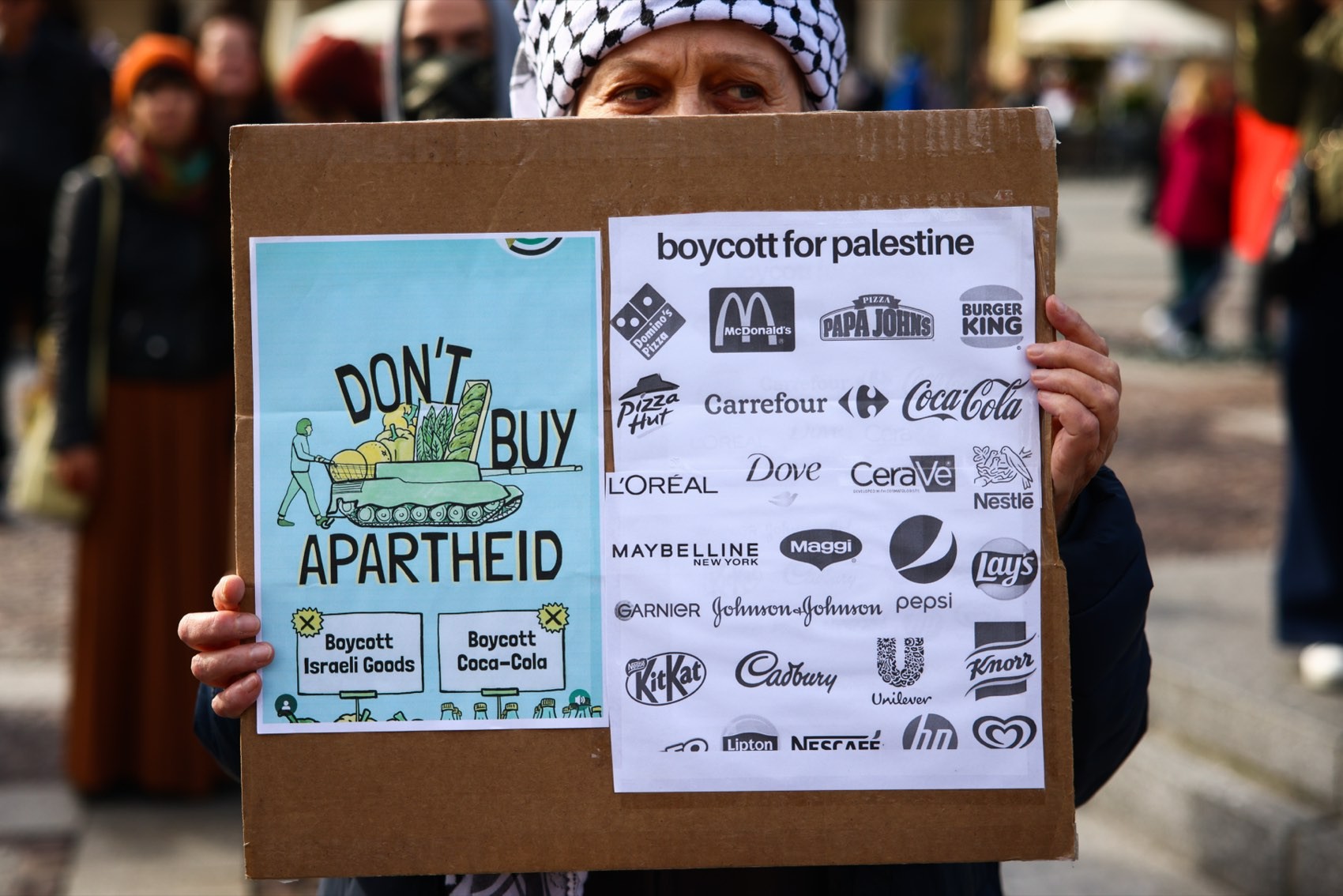
A protester holds a sign calling to boycott major brands in support of Palestine

An investigation conducted by Arabi Post into the details of annual filings submitted by major global companies during the war on Gaza found that they explicitly or implicitly acknowledged being negatively affected by the widespread boycott campaigns targeting their products in the Middle East and Islamic countries, to the point that the continuation of these boycotts is now listed among the key risks that could affect their future business operations.

The documents we analyzed show that what the companies stated in their official disclosures was, in several cases, clearer and more detailed than what their executives said publicly. While their media messaging was characterized by caution and brevity when discussing their performance in the Middle East amid the escalating boycott movement, their annual reports revealed that the boycott had shifted from a form of public pressure to a factor embedded in the language of financial and legal risks communicated to investors.

The Seven Brands

The investigation covered seven major brands, most of them American, and among the most prominent brands in the Arab world. They were primary targets of boycott campaigns that intensified following the outbreak of the war on Gaza on October 7, 2023, due to positions, relationships, or allegations of support for Israel—ranging from donations and support provided by some local franchise owners to the Israeli military, to partnerships with Israeli entities.

The brands are McDonald’s, KFC, Burger King, Coca-Cola, Pepsi, Starbucks, and Pizza Hut. What they have in common is that they are listed on U.S. stock exchanges and are therefore required to make public financial disclosures, and that they operate in Middle Eastern and broader Islamic markets where the scope of the boycott expanded during the war.

McDonald's KFC Pizza Hut Burger King Coca-Cola Pepsi Starbucks

How was the tracking done?

For this investigation, Arabi Post relied on a review of the annual financial disclosures that companies listed on U.S. stock exchanges file with the U.S. Securities and Exchange Commission (SEC) through the EDGAR system.

This system is the official electronic database that provides access to corporate filings and periodic reports. We examined the annual Form 10-K reports of the seven brands for the fiscal years 2022 through 2025, as these reports are the most important documents through which companies provide investors with a detailed picture of their operations, financial and operating results, and the risks that may affect their performance.

The boycott shifted from public pressure to a fixture in the financial-risk language companies address to their investors.

The analysis focused on three main areas within those reports: risk disclosure sections, management’s discussion of financial results, and revenue by geographic region. Through these sections, we tracked when companies began referring to the war in Gaza, discussing the boycott and consumer reactions, and how their official language changed before and after the war.

The companies’ financial disclosures do not prove that the boycott alone caused declines in sales or revenue. However, they reveal that the companies themselves recognized the effects of the war, the boycott, and shifting consumer preferences to such an extent that they incorporated them into their annual reports intended for investors.

It is worth noting that the fiscal year for most companies typically ends at the end of December, while for others it ends in September or early October, as is the case with Starbucks.

In this report, Arabi Post examines each company’s disclosures individually: How did it discuss the boycott? Where did the impact appear in the numbers? And how did the language of risk change before and after the war? Readers may follow the companies in sequence or go directly to the company that interests them from the list below.
The brands that faced boycott campaigns

Read the full investigation in order, or jump straight to the company you care about.

Read the full investigation ↓

McDonald's

The war enters the language of sales and risk

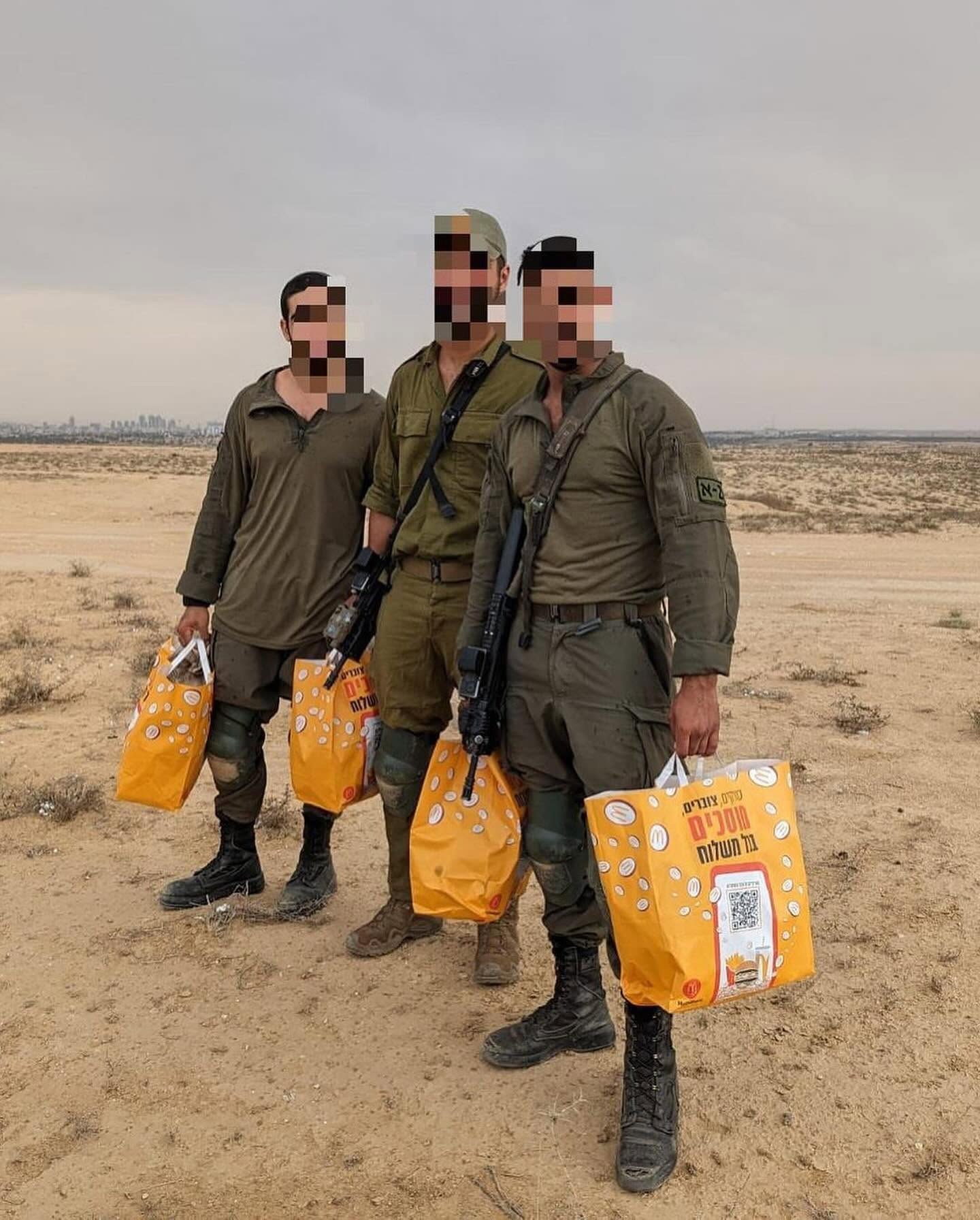
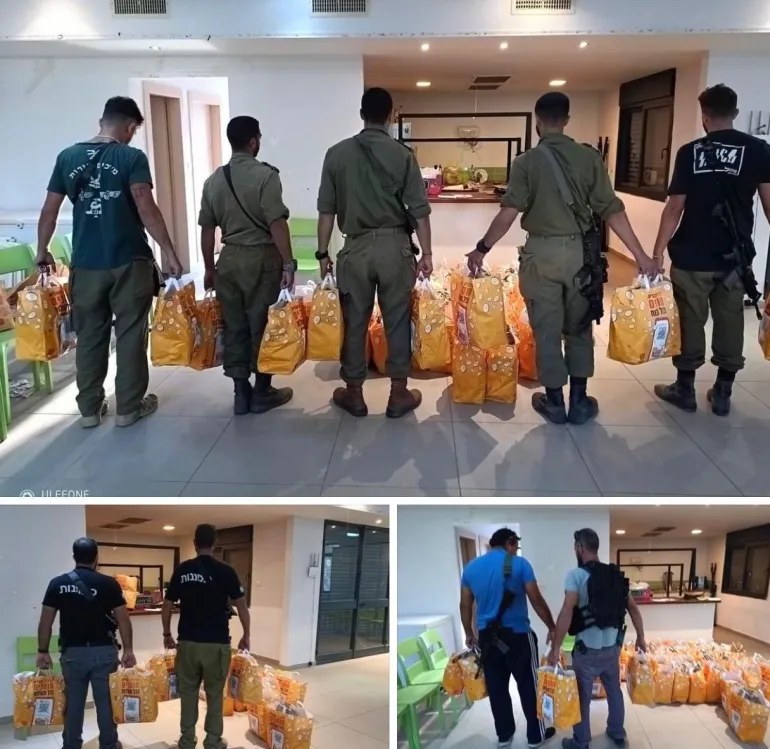
McDonald’s U.S. branches faced a broad boycott campaign in the early days of the war on Gaza after its franchisee in Israel published photos showing that it was donating thousands of meals daily to the Israeli army while the Strip was under bombardment.

Israeli soldiers carrying McDonald's bags in an open area McDonald's meals distributed to Israeli soldiers inside a building
McDonald's franchisee in Israel donated meals to the Israeli army at the start of the war on Gaza. Image source: McDonald's Israel Instagram account

Globally, McDonald’s operates through three main segments: the United States; internationally operated markets with local partners; and the international developmental licensed markets segment, known as IDL. This segment includes more than 75 countries, including markets in the Middle East, North Africa, and Islamic countries that witnessed widespread boycott campaigns during the war.

Most restaurants in this segment operate under a franchise or developmental license model, meaning they are run through local operators and investors who own or manage the rights to operate restaurants under the McDonald’s brand in exchange for royalties and fees paid to the parent company, often calculated as a percentage of sales. As a result, declining demand first affects the local operator, and its impact then appears on McDonald’s through lower sales-linked fees and royalties.

We analyzed the details of the risk disclosures McDonald’s provided in its annual reports. The analysis showed that the Middle East did not appear in the 2022 report as a specific source of risk to the company’s business.

But that changed in the 2023 report, in which McDonald’s said its sales and revenues were negatively affected in the final quarter of 2023, particularly in the segment that includes Middle Eastern markets, and expected this impact to continue as long as the war continued.

McDonald's — 2023 Report

Beginning in the fourth quarter 2023, the Company's Systemwide sales and revenue has been negatively impacted by the war in the Middle East, primarily in the International Developmental Licensed Markets & Corporate segment, where the majority of restaurants are under a developmental license or affiliate arrangement. The Company is monitoring the evolving situation, which it expects to continue to have a negative impact on Systemwide sales and revenue as long as the war continues.

Source:McDonald's Annual Report — FY 2023

In the same disclosure, the company revealed a notable measure that coincided with the escalation of boycott calls in the Arab world: it said it had provided some franchisees affected by the war in the Middle East with support that included reducing royalty fees and deferring the collection of cash amounts due.

McDonald's — 2023 Report

In the fourth quarter 2023, the Company provided an insignificant amount of assistance, including royalty relief and deferral of cash collection for certain franchisees impacted by the war in the Middle East in the International Developmental Licensed Markets and Corporate segment. This assistance may continue and increase as long as the war continues.

Source:McDonald's Annual Report — FY 2023

2024 was the most important test, as it was the first full year of the war and boycott. In that year’s report, the company no longer spoke of an impact that began in the final quarter of 2023; rather, it said its sales and revenues had continued to be negatively affected by the war in the Middle East, adding that this impact could persist until the war ends and macroeconomic conditions recover.

McDonald's — 2024 Report

The Company's Systemwide sales and revenue have continued to be negatively impacted by the war in the Middle East, primarily in the International Developmental Licensed Markets & Corporate segment (...) which it expects to continue to have a negative impact on Systemwide sales and revenue until the war concludes and the macroeconomic conditions recover.

Source:McDonald's Annual Report — FY 2024

Summary: How risk language changed over the years

  1. 2022

    No mention of the Middle East or the boycott's impact among the risk factors

  2. 2023

    First acknowledgment: an adverse impact from "the war in the Middle East" began in the final quarter, with support for affected franchisees

  3. 2024

    Impact entrenched: a sustained decline in sales coinciding with the peak of boycott calls

The impact of the war on McDonald’s in 2024 coincided with a decision the company made that same year: acquiring 228 restaurants in Israel that had been operated by the local franchise company Alonyal.

The deal itself does not prove that the boycott was the main and sole reason for the company’s decision regarding its brand in Israel, but it changed the nature of the company’s relationship with the Israeli market, from restaurants operated through a local franchisee to a more direct presence by the parent company.

228

restaurants in Israel that McDonald's took over directly in 2024, after pulling them from the local franchisee "Alonyal."

Risk disclosure was not the only thing reflecting pressure on the company amid the war and boycott. The figures McDonald’s provided show a clear shift in the performance of the segment that includes its Middle Eastern outlets.

In 2022, this segment was one of McDonald’s strongest growth drivers, recording 16% growth in “comparable sales.” Comparable sales is a metric that measures sales at the company’s existing branches only, excluding the effect of new branch openings, and therefore helps assess customer activity at existing locations rather than the impact of expansion.

2022

+16%

Peak growth

2024

−0.3%

First decline

Comparable sales for the Middle East segment — the first contraction, coinciding with the peak of boycott calls

In 2023, even though the war began in the final quarter of the year, the segment continued to grow by 9.4%. But in 2024, the first full year of the war and boycott, the growth metric declined, recording a decrease of 0.3%.

Notably, McDonald’s itself attributed the decline in comparable sales in this segment to two factors: the continued impact of the war in the Middle East and lower sales in China.

Comparable sales in the Middle East segment (Developmental Licensed)

Annual same-store growth at McDonald's — from the 2022 peak to the first decline in 2024 (the first full year of the war), then a partial recovery in 2025.

Source: McDonald's Annual Reports (Form 10-K) — FY 2022–2025, SEC

Features of the slowdown also appear in a broader metric: “systemwide sales,” meaning total sales at restaurants owned by McDonald’s and those operated by franchisees. In the segment that includes its Middle Eastern outlets, growth in this metric fell from 9% in 2023 to 0% in nominal terms in 2024, coinciding with the peak of boycott calls targeting the company.

↑ Back to the list of companies

KFC and Pizza Hut

The boycott appears among the risks

KFC does not appear as an independently listed company with a separate annual report filed with the U.S. Securities and Exchange Commission. Rather, it appears as a brand and operating division within Yum! Brands, which also includes Pizza Hut, Taco Bell, and Habit Burger & Grill.

KFC is the group’s largest brand, with a network of tens of thousands of restaurants around the world, most of them outside the United States and the majority operating under a franchise model. This model makes the brand more exposed to shifts in consumer behavior in international markets: declining customer demand first affects the local franchisee, then reaches the parent company through franchise and licensing fees and sales-linked royalties.

Yum! Brands submits its annual report on a consolidated basis, but it breaks down performance by brand, making it possible to read the performance of KFC and Pizza Hut independently within the parent company’s disclosures.

In its 2024 report, Yum! Brands emerged as one of the clearest cases in this investigation. The company did not merely refer generally to geopolitical risks or sales pressures; it devoted a separate section titled “Middle East Conflict”, in which it said that some of its markets had begun to be affected since the fourth quarter of 2023, the period in which the war on Gaza began and calls for boycott escalated.

The company identified the two most affected brands: KFC and Pizza Hut. It also named the markets where the impact was clearest: the Middle East, Malaysia, and Indonesia—markets that witnessed broad boycott campaigns during the war.

Yum! Brands estimated the impact of these markets on its global comparable sales growth at about one percentage point during 2024, while acknowledging that the impact extended to other markets and trade areas where its scale is difficult to determine precisely.

One percentage point may seem limited, but it becomes significant when measured against systemwide sales of $65.5 billion, as it is mathematically equivalent to around $655 million. This does not mean it was a proven direct loss, but it illustrates the scale of the impact the company officially measured, while acknowledging that the actual effect may have been broader.

The company’s risk language evolved across the reports it filed during the war on Gaza. In its 2023 report, Yum! Brands used explicit wording about “consumer boycotts of Western brands” among the risks linked to geopolitical conflicts and consumer reactions.

Yum! Brands

As a result of our global operations, we also have increased exposure to geopolitical events and instability. We have been adversely affected, and may continue to be adversely affected, by ongoing geopolitical instability arising from current events such as the military conflict between Russia and Ukraine, and the conflict in the Middle East. Such conflicts may affect our business and operations as result of, among other things, the economic consequences and disruptions from such conflicts, increased energy and supply prices, consumer boycotts of Western brands, consumer reaction to perceived acts or failures to act by us or our concepts.

Source:Yum! Brands Annual Report — FY 2023

But in the 2024 report, the language became more specific about the impact and less direct in naming the boycott. The company said sales in some of its markets were negatively affected during 2024 by the conflict in the Middle East, but replaced the phrase “consumer boycotts” with the softer wording of declining consumer sentiment toward Western brands.

Yum! Brands

As a result of our global operations, we also have significant exposure to geopolitical events and instability. We have been adversely affected, and may continue to be adversely affected, by events such as the conflict in the Middle East as well as the conflict between Russia and Ukraine (...) Such conflicts have adversely affected, and may continue to adversely affect our business and operations (...) In particular, sales in certain of our markets were adversely impacted in 2024 by the conflict in the Middle East.

Source:Yum! Brands Annual Report — FY 2024

As for the 2025 report, the more direct wording receded, and a broader phrase appeared about rising anti-American sentiment, alongside instability and conflicts in the Middle East. This shift does not negate what appeared in the 2023 and 2024 reports, but it reveals the company’s language moving from clearly naming the boycott and consumer reactions to broader, less specific expressions.

Yum! Brands

As a result of our global operations, we have significant exposure to geopolitical events and instability. We have been adversely affected in the past, and may in the future be adversely affected, by events such as increasing anti-American sentiment and instability and conflicts in the Middle East.

Source:Yum! Brands Annual Report — FY 2025

Summary: How risk language changed over the years

  1. 2023

    Direct naming: "consumer boycotts of Western brands"

  2. 2024

    Softer language: "a decline in consumer sentiment," with an acknowledgment of a tangible impact on sales

  3. 2025

    Generalization: "anti-American sentiment" without naming the boycott

The indicators did not stop at the language of risk. The figures disclosed by Yum! Brands show a clear decline in the performance of KFC and Pizza Hut during the first full year of the war and boycott.

The indicators did not stop at the language of risk. The figures disclosed by Yum! Brands show a clear decline in the performance of KFC and Pizza Hut during the first full year of the war and boycott.

In 2024 specifically, the decline was not the result of a drop in the number of outlets. On the contrary, KFC continued to expand and increased its number of restaurants worldwide, but sales at existing outlets declined. This divergence between geographic expansion and declining comparable sales suggests that opening new restaurants was not enough to obscure the pressure on existing markets, amid the peak of the war and boycott.

As for Pizza Hut, the other brand within Yum! Brands, it appeared more affected in the figures, as its comparable sales moved from 2% growth in 2023 to a -4% decline in 2024, then remained negative in 2025 at -1%. Thus, Pizza Hut did not recover at the same pace that later appeared in KFC.

Comparable sales for the KFC and Pizza Hut brands

Annual same-store growth — a sharp decline in 2024 (the first full year of the war and boycott), and an uneven recovery afterward.

Source: Yum! Brands Annual Reports (Form 10-K) — FY 2022–2025, SEC

↑ Back to the list of companies

Burger King

A new international segment timed with the war

Burger King is part of Restaurant Brands International, known as RBI, a company registered in Canada and listed on the Toronto and New York stock exchanges.

Alongside Burger King, the group owns other brands: Tim Hortons, the Canadian coffee chain; Popeyes, the American fried chicken chain; and Firehouse Subs, a sandwich chain the company acquired in 2021.

PepsiCo Parent company
  • Burger King
  • Tim Hortons
  • Popeyes
  • Firehouse Subs

Burger King does not appear in U.S. Securities and Exchange Commission filings as an independent company with a separate annual report, but rather as a brand and operating segment within the parent company, which submits its annual report on a consolidated basis.

The company presents its performance through segments that combine brand and geography, with separate segments for each of its brands in the United States and Canada, and a single international segment covering all brands’ operations outside the United States and Canada.

In the fourth quarter of 2023, the same period in which the war on Gaza began and boycott campaigns escalated, RBI created a separate financial segment called “INTL”, short for international operations.

This segment includes the operations of the four brands outside the United States and Canada, including markets in the Middle East, North Africa, Asia, and Latin America.

The company does not say that creating this segment was due to the war or the boycott, and its financial disclosures do not establish that. But the timing is notable: since then, the performance of international operations, which include markets that witnessed broad boycott campaigns during the war, has appeared in a separate segment that can be tracked.

Risk Language: From Generality to Mentioning Boycotts

A review of RBI’s disclosures between 2022 and 2025 shows that the company gradually moved from general wording about risks in international markets to including boycotts and the Middle East in its risk language after the war began.

In the 2022 report, the company merely referred to the risks of operating outside the United States and Canada, including anti-American or anti-Canadian sentiment, without naming the Middle East as a specific source of risk and without using the word “boycott.”

Burger King (RBI)

risks and costs associated with political and economic instability, corruption, anti-American or anti-Canadian sentiment and social and ethnic unrest in the countries in which we operate.

Source:Restaurant Brands International Annual Report — FY 2022

But in the 2023 report, filed months after the war began, the word “boycotts” entered the list of risk factors in international markets, within a context discussing anti-American or anti-Canadian sentiment and social and political unrest.

In the same report, the company added a paragraph on the conflicts in Ukraine and the Middle East, saying these conflicts could continue to negatively affect economic conditions, including through reduced demand for brands associated with America or Canada.

Burger King (RBI)

The conflicts between Russia and Ukraine and in the Middle East may continue to adversely impact economic conditions in those regions and elsewhere including through decreased demand for brands associated with the U.S. or Canada and/or increased commodity, labor and energy costs, and/or delays or disruptions in supply chains that may adversely affect us and our franchisees' restaurants.

Source:Restaurant Brands International Annual Report — FY 2023

In its 2024 report, the language grew firmer. Instead of speaking only of a potential impact, the company said that the conflicts have adversely affected, and may continue to adversely affect, its business. It added that declining profitability among affected franchisees could delay the development and opening of new restaurants.

In the 2024 report, the wording became more forceful. Instead of speaking only of a potential impact, the company said the conflicts had negatively affected, and could continue to negatively affect, its business. It added that declining profitability among affected franchisees could delay the development and opening of new restaurants.

Burger King (RBI)

Geopolitical conflicts in the Ukraine and the Middle East have and may continue to adversely impact economic conditions in those regions and elsewhere including through decreased demand for brands associated with the U.S. or Canada (...) Decreased profitability of affected franchisees may also delay restaurant development.

Source:Restaurant Brands International Annual Report — FY 2024

In the 2025 report, however, the language shifted toward broader wording. Instead of focusing solely on Ukraine and the Middle East, the company referred to the Ukraine-Russia conflict and tensions in the Middle East, Latin America, and East Asia. Thus, the Middle East became part of a wider list of geopolitical risks, after having been more prominent in the 2023 and 2024 disclosures.

The wording also moved from the sense of an ongoing impact to a more general phrase stating that these tensions had affected and may affect the company in the future—language that is less specific in describing the continuation of the current impact.

Burger King (RBI)

Geopolitical conflicts and related tensions, including the ongoing conflict between Ukraine and Russia and tensions in the Middle East, Latin America, and East Asia, have and may in the future adversely impact economic conditions in and around the regions where they occur. Adverse impacts may include negative perceptions for brands associated with the U.S. or Canada (...) decreased franchisee profitability and delays in restaurant development in such regions.

Source:Restaurant Brands International Annual Report — FY 2025

Summary: How risk language changed over the years

  1. 2022

    No mention of the Middle East or the word "boycott"; only sentiment hostile to America or Canada

  2. 2023

    The word "boycotts" enters the list of international risk factors

  3. 2024

    Stronger language: conflicts had an adverse impact and may persist, and a decline in franchisee profitability could delay restaurant openings

  4. 2025

    Generalization: the Middle East within a broader list of geopolitical risks

A Slowdown in Both Sales and Expansion

In terms of figures, the international markets segment of Burger King’s parent company and the other brands shows a clear slowdown in international operations. Comparable sales growth fell from 15.4% in 2022 to 9% in 2023, then to 3.3% in 2024, the first full year of the war and boycott, before partially rising to 4.9% in 2025.

RBI International Segment — Comparable Sales and Restaurant Growth

A simultaneous slowdown: comparable sales growth and net restaurant growth both decline together between 2022 and 2024.

Comparable sales

Net restaurant growth

Source: Restaurant Brands International annual reports (Form 10-K) — 2022–2025, SEC

These figures show that the international operations segment lost a significant share of its growth momentum between 2022 and 2024. This is not enough to say that the boycott alone explains the decline, because the segment includes multiple regions and brands, but the slowdown occurred in the segment that includes Middle Eastern markets and countries that witnessed boycott campaigns during the war.

Notably, the slowdown did not appear only in sales at existing branches, but also in expansion. Net restaurant growth—that is, new branches after subtracting closures—fell from 9.1% in 2022 to 6.1% in 2024, then to 4.9% in 2025.

This simultaneous decline in comparable sales and branch openings differs from the case of KFC, where the number of restaurants continued to expand strongly despite declining sales at existing branches. In RBI’s case, however, signs of pressure appear in both directions: slower growth at existing branches and a slowdown in new restaurant openings.

↑ Back to the list of companies

Coca-Cola

A Direct Acknowledgment That the Boycott Reduced Demand

Among the seven companies whose financial disclosures Arabi Post reviewed, Coca-Cola appears to be the clearest in naming the impact of the boycott. In the risk disclosure section of its annual reports filed with the U.S. Securities and Exchange Commission, the company acknowledged that boycott campaigns resulting from political activism had reduced demand for its products.

Coca-Cola differs from the restaurant companies we examined. It does not primarily rely on operating branches or granting franchises, but on selling concentrates to local bottling companies. Concentrates are the basic, concentrated mixture of the beverage, which bottling companies purchase and then mix locally with water, sugar or sweeteners, and carbonation before bottling and distribution.

For that reason, the parent Coca-Cola company’s figures appear less severe than those of other companies, but its disclosure language was more explicit. In its 2023 report, the company wrote that boycott campaigns resulting from political activism had reduced demand for its products.

Coca-Cola — 2023 Report

At times, we have faced product boycotts resulting from activism, which have reduced demand for our products.

Source:Coca-Cola Annual Report — FY 2023

In its 2024 report, the company added an explicit reference to its operations facing disruptions due to international conflicts, including conflicts in the Middle East, and acknowledged that it had at times faced boycott campaigns that led to reduced demand for its products.

Coca-Cola — 2024 Report

(...) At times, we have faced product boycotts resulting from political activism, which have reduced demand for our products.

Source:Coca-Cola Annual Report — FY 2024

In its 2025 report, Coca-Cola retained its general acknowledgment of boycotts and disruptions resulting from international conflicts, but it no longer mentioned the Middle East by name as it had in its 2024 report.

Coca-Cola — 2025 Report

Other financial uncertainties in our major markets and unstable geopolitical conditions or events in certain markets, including international conflicts (...) could undermine global consumer confidence and reduce consumers' purchasing power, thereby reducing demand for our products. Throughout 2025, the Company faced disruption to our operations due to international conflicts. (...) At times, we have faced product boycotts resulting from political activism, which have reduced demand for our products.

Source:Coca-Cola Annual Report — FY 2025

Summary: How risk language changed over the years

  1. 2023

    Explicit naming: "boycott campaigns... reduced demand for our products"

  2. 2024

    Naming "the Middle East" explicitly, while acknowledging the boycott and the drop in demand

  3. 2025

    Keeping the acknowledgment of the boycott, without naming the Middle East

The figures: Eurasia and Middle East unit

The significance of this shift is also reflected in the figures for the Eurasia and Middle East operating unit, which includes key Arab and Islamic markets. Performance here is measured using the unit case volume metric—that is, the number of beverage units sold rather than their dollar value. This metric is therefore particularly important because it provides a closer measure of actual consumer demand, independent of the effects of inflation or currency fluctuations.

Eurasia and Middle East Unit — Annual Change in Unit Case Volume

Sales volume in unit cases (not value): a turn into negative territory in the peak years of the war and boycott, then a recovery in 2025.

Source: Coca-Cola annual reports (Form 10-K) — 2022–2025, SEC

The figures show a clear turning point. After strong growth of 8% in 2022, the Eurasia and Middle East operating unit entered negative territory in 2023—the year in which the war on Gaza began in its final quarter and the boycott intensified—and the decline deepened to -2% in 2024, the first full year of the war and boycott. In 2025, the unit returned to growth, posting a 7% increase.

These figures are not sufficient to conclude that the boycott alone explains the decline, as other factors such as currency fluctuations, inflation, and conditions in individual markets also played a role. However, their significance stems from two concurrent facts: the company itself acknowledged that boycott campaigns reduced demand for its products, and the Eurasia and Middle East unit declined during the two years that witnessed the peak of the war and boycott.

Coca-Cola also notes in its disclosures other factors that affected some areas of its business, including the suspension of operations in Russia. However, this explanation alone is not enough to account for what appeared specifically in the Eurasia and Middle East unit. The company reports the impact of Russia within the performance of the Europe unit under its Europe, Middle East, and Africa segment, not within the Eurasia and Middle East unit.

Moreover, the suspension of business in Russia was announced in March 2022, meaning its impact began before the 2023 fiscal year, although it may still have affected comparisons between 2023 and 2022, since 2022 included part of the company’s Russian operations before the suspension.

At times, we have faced product boycotts resulting from political activism, which have reduced demand for our products.

Source: Annual Report of The Coca-Cola Company (Form 10-K) — FY 2024, SEC.

↑ Back to the list of companies

Pepsi

The company that erased its segment instead of explaining its decline

The brand known in the Middle East as Pepsi is part of the broader parent company PepsiCo, which, in addition to the Pepsi beverage, owns a wide portfolio of consumer brands including Lay’s, Doritos, Cheetos, Gatorade, Mountain Dew, Quaker, and Bubly.

PepsiCo Parent company
Pepsi
Lay's
Doritos
Cheetos
Gatorade
Mountain Dew
Quaker
bubly

The Pepsi case is particularly sensitive among boycott supporters because of two brands linked to Israel, directly or indirectly. The first is SodaStream, an Israeli company acquired by PepsiCo in 2018.

The second is Sabra, the well-known hummus brand in the U.S. market, which was jointly owned by PepsiCo and the Israeli Strauss Group until PepsiCo acquired Strauss’s remaining stake on December 3, 2024, making Sabra wholly owned by PepsiCo.

This makes Pepsi different from some of the other companies in this investigation. It owns, or has owned, partnerships in brands that are sensitive among boycott supporters, while also maintaining a significant presence in the Middle East, South Asia, and Africa—markets that include countries where widespread boycott campaigns took place during the war on Gaza.

The company grouped these markets within an operating segment called AMESA (Africa, Middle East, and South Asia). Beginning with the 2025 fiscal year, however, PepsiCo restructured its reporting segments and merged AMESA with Europe into a broader segment.

This move does not in itself prove that the company intended to obscure the impact of the boycott, as restructuring may simply have been a routine managerial decision. In practice, however, it changed the ability of external readers to track the performance of Middle Eastern and South Asian markets within the company’s disclosures as they previously could. The figures may still exist internally, but they no longer appear as a separate segment in public reporting.

Risk Language: From Absence to Mentioning Boycotts

A review of the risk language in PepsiCo’s reports shows a pattern similar to that of other companies. In its 2022 report, there was a general reference to the possibility that consumers might reduce purchases of the company’s products or publicly boycott them, and the Middle East was mentioned among the risks associated with developing and emerging markets.

However, the report did not yet link the Middle East to an ongoing conflict or specific geopolitical tensions—wording that would become clearer in later reports after the outbreak of the Gaza war.

In the 2023 report, the boycott entered the company’s disclosures in stronger terms. PepsiCo stated that certain factors had reduced, and could continue to reduce, consumers’ willingness to purchase some of its products, including as a result of public boycott campaigns.

PepsiCo — 2023 Report

Concerns with any of the foregoing could lead consumers to reduce or publicly boycott the purchase or consumption of our products (...) These and other factors have reduced and could continue to reduce consumers' willingness to purchase certain of our products, including as a result of public boycotts.

Source:PepsiCo Annual Report — FY 2023

In the 2024 report, two notable shifts occurred. First, the company explicitly named the ongoing conflicts in Ukraine and the Middle East for the first time in disclosures within this context. Second, it added a striking reference to growing negative consumer sentiment toward non-local products.

PepsiCo — 2024 Report

Pandemics (...) and geopolitical events and tensions, wars and other military conflicts, including the ongoing conflicts in Ukraine and the Middle East, have also impacted and could continue to impact consumer preferences and demand for our products, including negative consumer sentiment toward non-local products (...) including as a result of public boycotts.

Source:PepsiCo Annual Report — FY 2024

In the 2025 report, the explicit reference to the “Middle East” disappeared from the risk disclosure text and was replaced by broader wording about geopolitical events and tensions, wars, and military conflicts. However, the company retained two key phrases: negative sentiment toward non-local products and reduced consumer willingness to purchase certain products, including as a result of public boycott campaigns.

PepsiCo — 2025 Report

Pandemics (...) and geopolitical events and tensions, wars and other military conflicts have also impacted and could continue to impact consumer preferences and demand for our products, including negative consumer sentiment toward non-local products (...) These and other factors have reduced and could continue to reduce consumers' willingness to purchase certain of our products, including as a result of public boycotts.

Source:PepsiCo Annual Report — FY 2025

Summary: How risk language changed over the years

  1. 2023

    Acknowledgment that "general boycott campaigns" reduced consumers' willingness to buy

  2. 2024

    Naming "the Middle East" explicitly, alongside "negative sentiment toward non-local products"

  3. 2025

    Dropping "the Middle East" from the risk text, and removing the "AMESA" segment from standalone disclosure

AMESA Segment: Decline Followed by Disappearance from Standalone Disclosure

The AMESA segment was the operating unit that encompassed Africa, the Middle East, and South Asia within PepsiCo. Its significance in this investigation stems from the fact that it grouped together key markets that experienced boycott campaigns or were affected by the atmosphere surrounding the war.

AMESA segment net revenue (Africa, Middle East and South Asia)

In millions of dollars: a decline in 2023 then a slight rise in 2024 — and in 2025 the segment no longer appears separately after restructuring.

Source: PepsiCo annual reports (Form 10-K) — 2022–2025, SEC

The company attributed the decline in AMESA’s revenues in 2023 primarily to a significant negative impact from currency fluctuations, driven in particular by the weakness of the Egyptian pound, in addition to a decline in organic volume.

Even so, net revenue increased by only 1%, supported by pricing and organic volume growth in other markets, while being pressured by a negative nine-percentage-point impact from currencies.

Then came 2025 without a standalone figure for the AMESA segment, after PepsiCo restructured its reporting segments. The change was not simply a complete merger of AMESA with Europe; rather, its operations were distributed among new segments, including Europe, Middle East, and Africa. Since that adjustment, historical comparisons of PepsiCo’s performance in the Middle East and South Asia have become more difficult for external readers, because the segment that once grouped these markets together no longer appears on its own in the annual disclosures.

The AMESA figures do not mean that the boycott alone explains the decline. The segment is broad and includes dozens of markets, and its figures are influenced by currencies, inflation, pricing changes, and the performance of different products. PepsiCo does not provide a complete country-by-country breakdown within the segment, nor does it separately disclose the performance of brands such as SodaStream or Sabra within it. The available disclosures also distinguish only between beverage revenues and convenient foods revenues at the segment level, not at the level of individual brands or countries.

↑ Back to the list of companies

Starbucks

The Company That Acknowledged It in Explicit Past-Tense Terms

Starbucks was among the prominent companies that faced calls and campaigns to boycott its stores during the war on Gaza. Its disclosures filed with the U.S. Securities and Exchange Commission show that boycotts appeared during that period among the risks that could affect the company’s business, although the documents do not explicitly link these boycotts to Gaza.

Globally, Starbucks operates through more than one model. In the United States, Canada, and China, the company directly operates a large number of its cafés, while in other markets, including the Middle East and North Africa, it relies on a licensing model under which it grants a local partner the right to use its brand.

In the Middle East and North Africa, the licensed partner is Kuwait’s Alshaya Group, which operates a wide network of Starbucks stores. In May 2024, Alshaya Group announced the layoff of more than 2,000 employees from the Starbucks network in the Middle East, attributing it to “difficult trading conditions.”

Reuters, however, said at the time that Alshaya Group’s decision came as the business was affected by consumer boycotts over the war in Gaza. The group’s announcement of the layoffs came around seven months after the start of the war on Gaza, at a time when the brand was facing widespread boycott campaigns in Arab and Islamic markets.

Starbucks

May 2024

More than2000

employees laid off from the "Starbucks" network in the Middle East — the Alshaya Group attributed it to "difficult business conditions."

Risk Language: From Warning to Acknowledgment

An analysis of Starbucks’ risk disclosures from 2022 through 2025 shows the boycott appearing more clearly in the company’s reports. It is worth noting that Starbucks’ fiscal year does not end at the end of December like the other companies, but usually ends in late September or early October each year.

In the company’s 2022 report, the word “boycotts” appeared, but in general contexts, without linking it to a specific campaign against Starbucks or to the Middle East. In the 2023 report, the company also discussed boycotts among the risks, again without linking them to the Middle East.

But in the 2024 report, the boycott appeared more prominently. The company moved the reference to boycotts into the list of “Cautionary Note Regarding Forward-Looking Statements,” one of the early pages of the report, and added that “allegations, even if untrue,” that the company does not respect internationally recognized human rights or that it takes positions on social or geopolitical issues could adversely affect the value of its brand.

Starbucks — 2024 Report

Allegations, even if untrue, that we are not respecting internationally recognized human rights, are failing to comply with applicable workplace and labor laws, or are aligned with positions on social or geopolitical issues could also negatively impact our brand value.

Source:Starbucks Annual Report — FY 2024

In the 2025 report, Starbucks moved to its most direct wording on the boycott, saying that “negative commentary about the company, even if inaccurate or malicious,” had harmed the value of its brand in the past and could harm it in the future.

Starbucks — 2025 Report

Developments affecting the value of our brands have in the past, and may in the future, trigger boycotts of our stores, products, and brand. Each of these consequences, individually and collectively, could have potentially material impacts on our brand value, business performance, and financial results.

Source:Starbucks Annual Report — FY 2025

In the same disclosure, the company acknowledged the role of social media platforms, video-sharing services, and instant messaging in accelerating the spread of negative commentary or publicity, sometimes before it has an opportunity to investigate or respond.

Starbucks — 2025 Report

Negative commentary about Starbucks, even if inaccurate or malicious, has in the past, and could in the future, damage the value of our brand, and adverse impacts may be compounded by social media, video-sharing, and messaging platforms that could dramatically increase the speed with which negative publicity may be disseminated, often before we have a meaningful opportunity to investigate, respond to, and address an issue.

Source:Starbucks Annual Report — FY 2025

Summary: How risk language changed over the years

  1. 2022

    The word "boycotts" in a general context, without linking it to a specific campaign or to the Middle East

  2. 2023

    Mentioning the boycott among the risks, without linking it to the Middle East

  3. 2024

    Highlighting it on the early pages: "claims, even if untrue," of adopting geopolitical positions that could harm the brand

  4. 2025

    The most direct wording: developments that triggered boycott campaigns against its stores, and may trigger them in the future

↑ Back to the list of companies

The significance of the disclosures made by major brands during the war on Gaza lies not only in the numbers, but also in the language the companies chose when addressing investors rather than the public.

Within legal documents that leave little room for diplomacy, boycott campaigns, the war, the Middle East, and declining demand appeared as factors placing pressure on business operations, showing that the boycott campaigns were not merely external noise surrounding the brands and their positions on the war in Gaza and Israel.

The companies’ financial disclosures do not determine the precise scale of the boycott’s impact, nor do they isolate it from the other economic and operational factors that affected them. However, they acknowledged—to varying degrees—that what occurred during the war entered into their calculations, influenced their risk disclosures, and, in some cases, was cited as part of the explanation for declining sales.